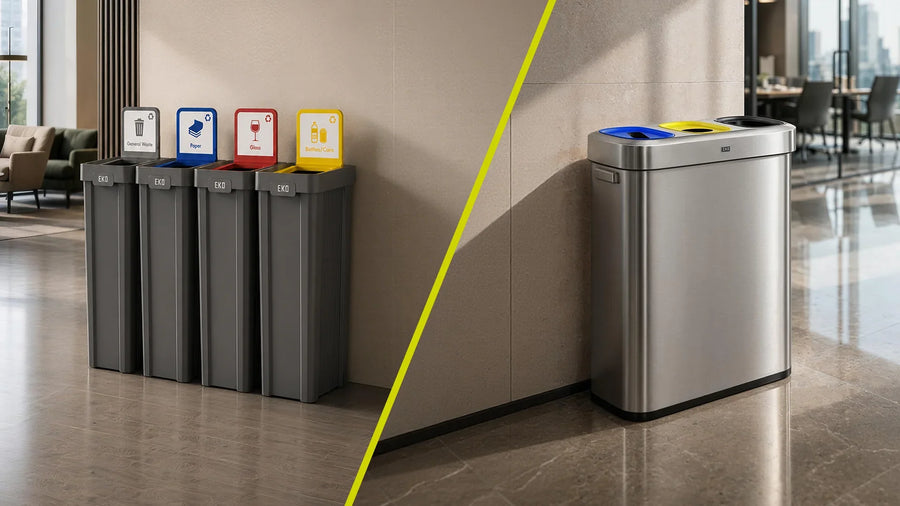
Quick Answer
The right commercial trash can depends on where it will be used, how often it will be used, and how much waste it needs to handle.
Offices often benefit from quiet operation and easy maintenance, while restaurants and high-use areas need durable construction, reliable performance, and the right capacity.
The best solution is not always the largest bin. It is the one that matches the daily waste volume, usage pattern, and servicing needs.
Why This Matters to Your Business Type
Different businesses have different waste needs. A trash can in an office meeting room has different requirements from one used in a restaurant kitchen or public area.
Office Spaces: In office settings, quiet operation, clean design, and easy maintenance are important considerations. Trash cans in meeting rooms, restrooms, and shared areas should support daily use without unnecessary noise.
Hotels and Hospitality: In hotels and hospitality spaces, trash cans are often placed in visible areas. A clean appearance and reliable operation help provide a better experience for guests and staff.
Restaurants and Commercial Kitchens: Restaurants require trash cans that can handle frequent disposal throughout the day. Durable pedals, large capacity designs, and easy bag changes support efficient daily waste handling.
Public Spaces and Facilities: Public areas need solutions that can handle high traffic and frequent use. Larger capacity bins and durable designs reduce service interruptions.
How to Assess Your Current Waste
1. Review daily waste volume. Understand how much waste is generated before choosing capacity.
2. Consider collection frequency. Choose a bin that fits the cleaning schedule.
3. Think about usage location. Meeting rooms, kitchens, hospitality areas, and public spaces all require different solutions.
Step-by-Step Recommendations
Step 1: Choose the right capacity. 30L-50L works well for offices and smaller shared spaces. 50L-80L supports larger workplaces and kitchens. 80L-120L is suitable for high-traffic areas and large commercial facilities.
Step 2: Choose the right opening style. Step cans provide direct control and long-lasting durability. Sensor cans are often preferred in premium workplaces and shared spaces where a smarter waste solution is expected.
Step 3: Prioritize commercial features. Durable stainless steel supports frequent use. Soft-close lids reduce noise. Removable inner liner makes cleanup and bag changes easier. Fingerprint-resistant stainless steel helps maintain a cleaner appearance.
Selection Table With Real Capacities and Product Features
|
Application
|
Recommended EKO Solution
|
Capacity
|
Key Features
|
|
Premium Offices
Hospitality
Shared Spaces
|
|
80 L / 21 Gallon
|
Smart Sensor Technology
Touchless Operation
Fingerprint-Resistant Stainless Steel
Large Capacity Design
|
|
Restaurants
Public Areas
High-Traffic Locations
|
|
80 L / 21 Gallon
|
Open Top Design
Large Capacity
Stainless Steel Construction
Easy Waste Disposal
|
|
Offices
Workplaces
Recycling Areas
|
|
30+30 L / 8+8 Gallon
|
Independent Compartments
Removable Inner Liners
Durable Foot Pedal
Soft-Close Lid
|
Common Mistakes
Choosing capacity only by available space instead of actual waste volume.
Overlooking ongoing upkeep, including cleaning, liner changes, and routine checks for sensor models.
Choosing residential trash cans for applications that require commercial-grade durability.
Recommended EKO Solution Categories
Durable Step Trash Cans: For offices, staff areas, and commercial kitchens. Features include durable pedals, soft-close lids, and removable inner liner.
Touchless Sensor Trash Cans: For hospitality, shared spaces, and hygiene-focused locations. Features include smart sensor technology, manual open mode, and power-efficient operation.
Sources
EKO Commercial Product Specifications and Feature Library.
Find the Right Commercial Trash Can
Explore EKO commercial trash cans designed for reliable performance, easy maintenance, and different business needs.
Frequently Asked Questions
What size commercial trash can does my business need?
30-50 L works well for offices and smaller shared spaces, 50-80 L for larger workplaces and commercial kitchens, and 80-120 L for high-traffic areas and large facilities. Base the choice on daily waste volume and collection frequency rather than available floor space alone.
Should I choose a step can or a sensor can?
Step cans provide direct control and long-lasting durability, making them a reliable choice for kitchens and staff areas. Sensor cans offer touchless operation and are often preferred in premium workplaces and shared spaces where hygiene and a smarter experience are expected.
What features matter most in a commercial trash can?
Durable stainless steel construction for frequent use, soft-close lids to reduce noise, removable inner liners for easier bag changes, and fingerprint-resistant finishes that keep visible areas looking clean.