

On this page
Maintenance Is What Makes Commercial-Grade Equipment Last
A stainless steel can or a motion-sensor unit is only as good as the maintenance program behind it. Facilities that treat waste equipment as install-and-forget end up replacing cans years earlier than their actual service life would allow, usually because of preventable issues: fingerprints and water spotting that make a finish look worn long before it's mechanically worn, dead batteries that quietly convert a sensor can back into a manual one, or liner changes done wrong often enough to damage the ring mechanism. A short, consistent maintenance routine solves all three, and none of it requires specialized tools or training beyond what janitorial staff already do daily.
Stainless Steel and Finish Care
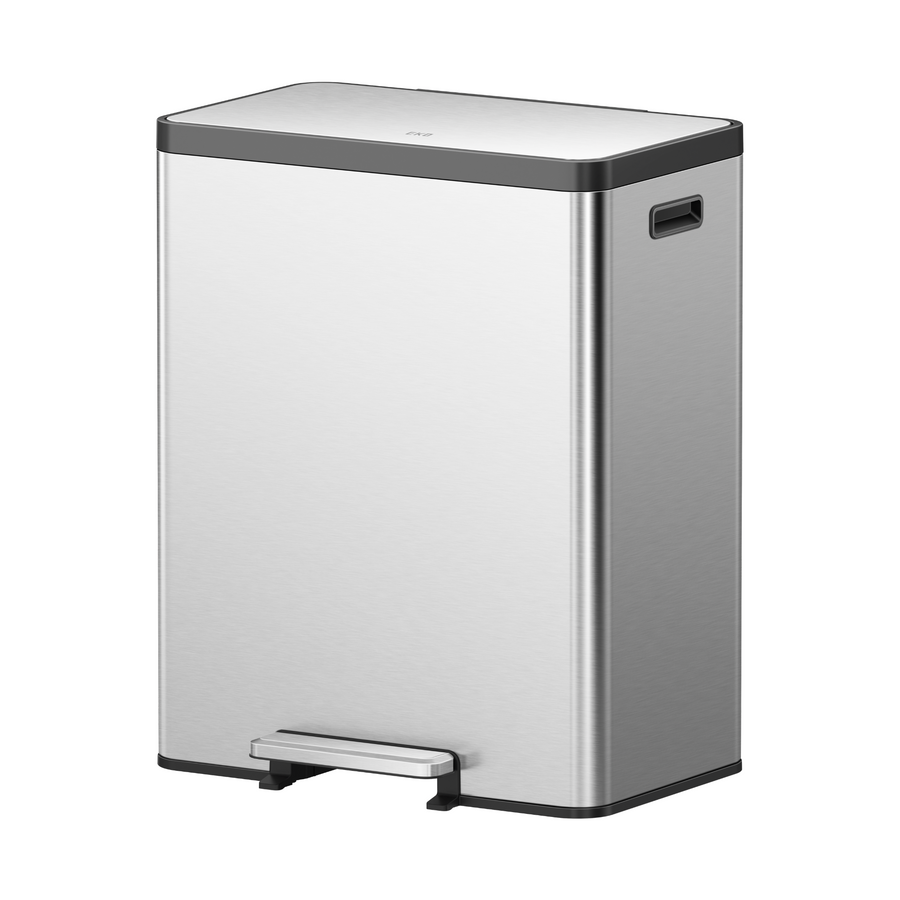
EKO's commercial line ships in several finishes — natural stainless steel, matte black, matte white, matte stainless, gunmetal, and black stainless — and each has slightly different care needs. Natural stainless steel shows fingerprints and water spots readily and should be wiped with a soft cloth and a stainless-specific or mild non-abrasive cleaner, always following the grain of the brushed finish rather than wiping in circles, which can create visible swirl marks over time. Matte finishes (matte black, matte white, matte stainless) are formulated to resist fingerprints far better than polished stainless, which is why they've become the default specification for high-touch public areas like lobbies and restrooms — but "fingerprint-resistant" is not "fingerprint-proof," and matte finishes still need a wipe-down on the same rotation as polished stainless, just less urgently.
Avoid abrasive pads, bleach-based cleaners, and anything containing chlorine on any stainless finish — these can pit the surface and cause discoloration that no amount of polishing will reverse. A five-minute exterior wipe-down as part of the standard restroom or corridor cleaning pass is sufficient for most finishes; higher-touch surfaces like lobby cans may need it twice per shift.
Liner-Ring and Bag-Change Best Practices
Step cans and sensor cans with a liner ring (Madison, Hudson, Maxwell, and most of EKO's step and sensor lines) hold the bag in place with a retaining ring or clip rather than relying on the bag alone. Pulling a full bag out without first releasing the ring, or forcing an oversized liner over the ring repeatedly, is the most common cause of a bent or cracked ring — which then fails to hold the next liner securely and causes bags to slip into the can mid-shift. The fix is procedural, not mechanical: release the ring, remove the bag, install the new liner over the ring first, then re-seat the ring before folding the bag over the rim. This takes only a few seconds longer than forcing it and avoids a repair or replacement call.
Correct bag sizing also protects the ring mechanism — an undersized bag stretched to fit puts constant tension on the ring, while a correctly sized liner sits without strain. See the trash bag sizing guide for matching liner codes to can capacity.
Sensor Can Battery Replacement Cadence
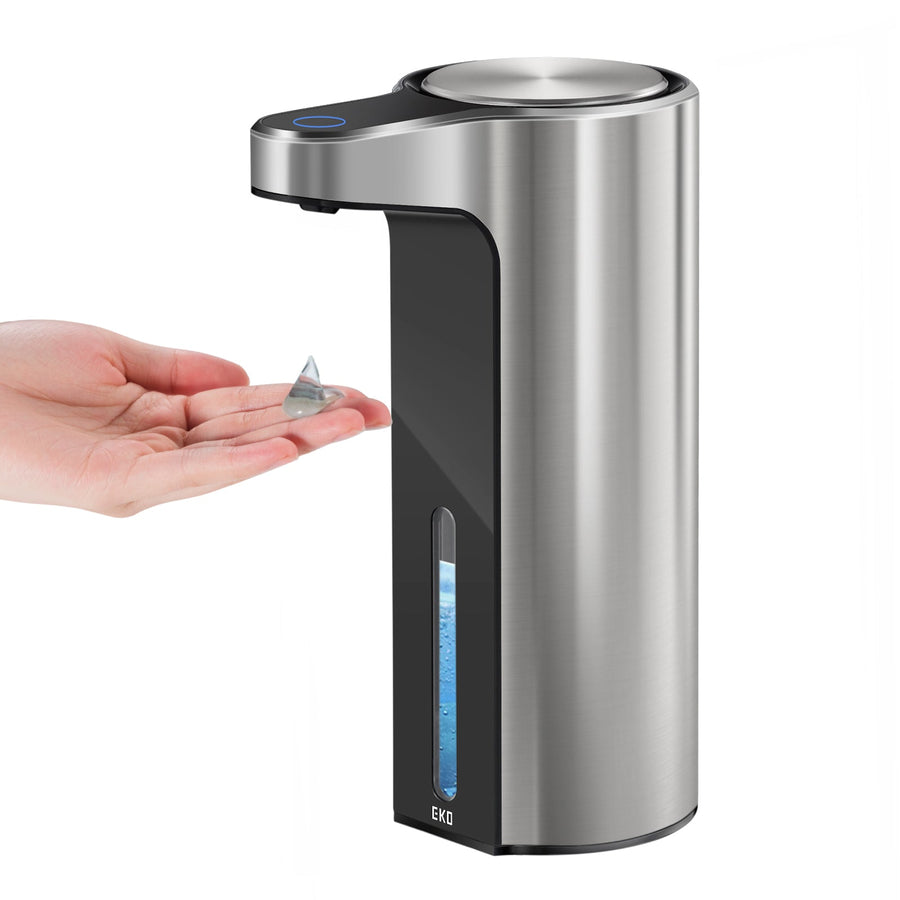
Every motion-sensor model in the line — Mirage-T, Mirage-X, Mirage Semi-Round, Phantom-T, Nova/EcoNova, Vintage, Ecosmart, and the smaller restroom sensor cans (Stella, Astro, Brio, Bono) — runs on batteries, and battery life varies with traffic volume rather than time alone. A high-traffic lobby or kitchen sensor can may need a battery change every few months, while a lower-traffic office break room unit can run considerably longer on the same set. Rather than tracking replacement on a fixed calendar, build a quick sensor-response check into the weekly cleaning rotation: if the lid response is sluggish or requires a second wave of the hand, treat that as the early warning sign and replace batteries before a full failure takes the unit fully manual.
Odor Control
Odor control in a well-maintained program comes from three things working together, not from any single fix: correctly sized liners that seal without gaps at the rim, a consistent liner-change frequency matched to the can's actual fill rate rather than a fixed schedule, and, where the can supports it, a sealed lid (step or sensor) rather than an open top for enclosed spaces like restrooms and break rooms. Scented liner options, available on select bag codes, are a reasonable supplement in restroom programs but should not substitute for the liner-change frequency doing the actual work.
Maintenance Schedule at a Glance
| Task | Frequency | Applies To |
|---|---|---|
| Exterior wipe-down (soft cloth, non-abrasive) | Daily to twice per shift in high-touch zones | All finishes |
| Liner change | Per fill rate, not a fixed schedule | All cans |
| Liner-ring inspection | Each liner change | Step and sensor cans with liner ring |
| Sensor response check | Weekly | All motion-sensor cans and dispensers |
| Battery replacement | As indicated by sluggish response; more frequent in high-traffic zones | All motion-sensor units |
Browse finish and model options in the full range, and for facilities standardizing a maintenance program across multiple properties, reach out for a quote to align equipment specs with the cleaning rotation your staff already runs.
Plastic and Resin Finishes Need a Different Routine
Not every commercial can in the fleet is stainless steel. The Hana and Hana Select step cans, Morandi and Brio sensor cans, Fandy tabletop bins, and Puro compost bins are plastic or resin construction, and they respond differently to cleaning than metal. Plastic resists fingerprints better than polished stainless by default, but it is more susceptible to staining from pigmented liquids and to UV fading if placed near windows or used outdoors over time. A mild soap-and-water wipe-down is sufficient for routine cleaning; avoid solvent-based cleaners on plastic components, since some can cause clouding or surface crazing that a stainless-appropriate cleaner would not cause on metal.
Preventing Small Problems Before They Become Replacement Decisions
Most premature can replacements in commercial fleets trace back to one of a small number of preventable issues rather than genuine end-of-service-life wear: a cracked liner ring from repeated forcing, a step-pedal mechanism that's gone stiff from grit buildup at the hinge, or a sensor unit written off as broken when the actual problem was a depleted battery. A brief monthly walk-through — checking pedal action on step cans, wiping hinge and pivot points free of debris, and confirming sensor response on motion-activated units — catches these before they compound into a full unit replacement. This is a small addition to a cleaning rotation that already exists; it does not require a separate maintenance visit or specialized staff.
Documenting the Program
For multi-site facilities teams, a simple maintenance log per property — noting last battery change, last deep-clean date, and any liner-ring repairs — turns maintenance from a reactive task into a trackable one. This is particularly useful when troubleshooting a recurring complaint (a specific restroom can that keeps needing early liner changes, for example) since a log makes it possible to spot a pattern instead of treating each complaint as an isolated incident.