

On this page
Quick Answer
Hotels need different waste solutions for different areas of the property. A guest room, lobby, restaurant, restroom, and service area all handle waste differently, so one trash can type will not fit every location.
Guest-facing areas usually need bins that look clean, operate quietly, and fit naturally into the surrounding space. Food-service and back-of-house areas often require solutions that can handle frequent disposal, cleaning, and daily staff use.
Choose Waste Solutions Based on Each Hotel Area
A hotel includes many different areas, and each one generates different amounts and types of waste.
Guest rooms usually generate smaller amounts of everyday waste. Lobbies and reception areas are highly visible and need products that fit the interior. Restaurants and breakfast areas may experience heavy disposal during service periods. Back-of-house areas need bins that are easy for staff to empty, move, and maintain during daily operations.
Before choosing a waste solution, consider where the bin will be placed, who will use it, how often it needs to be emptied, and how staff will clean and service it.
Guest Rooms: Keep Waste Simple and Discreet
Guest room trash cans should be easy for visitors to use and simple for housekeeping teams to handle during room cleaning.
A suitable guest room bin should fit naturally beside furniture or bathroom fixtures, take up minimal room, make liner change quickly, and maintain a clean appearance.
Lobbies and Reception Areas: Balance Appearance and Easy Disposal
Lobbies and reception areas are highly visible spaces where guests frequently pass through, so trash cans need to look clean while remaining easy to use and service.
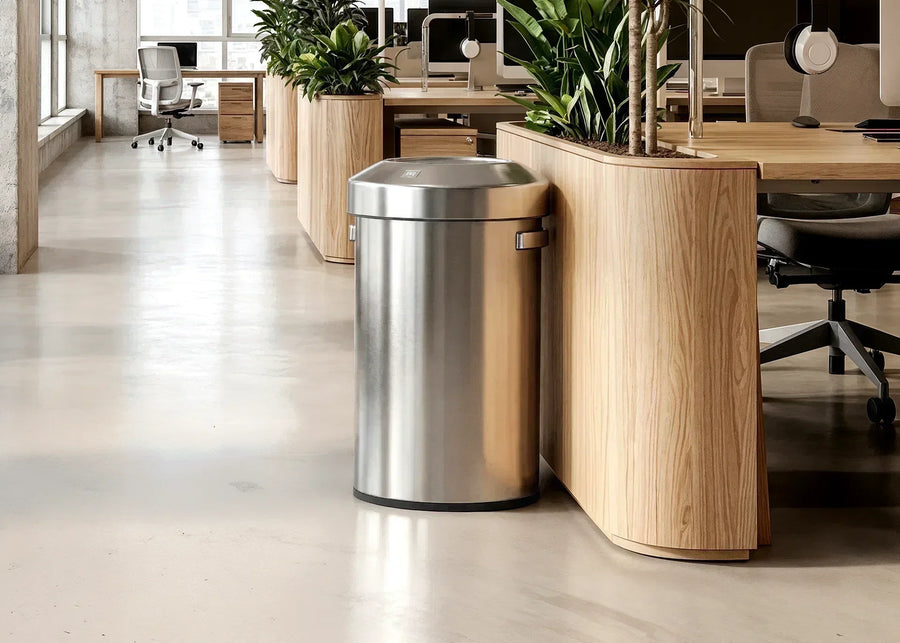
Semi-round designs can work well in reception areas because they sit closer to walls and fit naturally into the layout. Open-top bins can also support quick disposal in areas where guests frequently throw away cups, packaging, and other everyday waste.
Meeting Rooms and Shared Workplaces: Reduce Disruptions
Meeting rooms and shared work areas need trash cans that operate quietly and fit easily into the space without interrupting conversations. Soft-close lids are useful in these spaces because they reduce noise when the lid closes.
Restaurants and Food-Service Areas: Handle Frequent Disposal
Restaurants, cafés, breakfast areas, and staff kitchens often see large amounts of waste during short service periods.
Step bins are commonly used in food-service areas because employees can open them with a foot pedal while handling food preparation or cleaning tasks.
Public Restrooms: Support Clean Disposal in Smaller Areas
Restrooms often have limited space around sinks, entrances, and walkways. Trash cans should be easy to access without blocking daily movement.
Useful features include slim designs, touchless operation, easy-to-clean surfaces, and odor-control features.
Back-of-House Areas: Prioritize Capacity and Easy Handling
Back-of-house areas such as housekeeping rooms, staff areas, and service spaces have different needs from guest-facing locations.
Staff often need bins that hold more waste, allow quick liner changes, move easily during cleaning, and handle frequent daily use.
Choosing the Right Waste Solution for Each Hotel Area
| Suitable Hotel Areas | Recommended Solution | Capacity | Key Benefits |
|
Guest Rooms |
Compact Sensor Trash Cans | 10 L - 20 L | Touchless operation Quiet closing Compact design for smaller spaces |
| Lobbies Reception Areas Hospitality Spaces |
Premium Sensor Trash Cans | 40 L - 80 L | Refined appearance Touchless disposal Suitable for visible guest areas |
| Guest Rooms Offices Food-Service Areas Staff Areas |
Step Trash Cans | 10 L - 60 L | Reliable daily use Easy operation Soft-close lid options |
| Meeting Rooms Offices Staff Areas Recycling Stations |
Dual Compartment Recycling Bins | 30 L+ | Organized waste sorting with separate compartments |
| Lobbies Dining Areas Public Areas High-Traffic Locations |
Open Top Commercial Bins | 50 L - 80 L+ | Quick disposal Large capacity Easy access |
| Back-of-House Areas Service Areas Waste Collection Points |
Large Capacity Commercial Bins | 60 L+ | Higher capacity Durable construction Easier servicing |
Common Hotel Waste Planning Mistakes
Using One Trash Can Type Everywhere
Different areas serve different purposes.
Choosing Appearance Without Considering Daily Service
Staff still need to empty liners, clean surfaces, and maintain the bin easily.
Ignoring Noise in Guest Areas
Loud lid movement can affect meeting rooms, hotel rooms, and other quiet locations.
Establish a Consistent Waste Solution Across Your Hotel
Hotels do not need the same trash can in every location. Guest rooms, lobbies, restaurants, restrooms, and service areas each require different solutions based on how the space is used.
A well-planned hotel waste system combines the right products for each area while keeping purchasing, maintenance, and daily operations easier to manage.
Sources
EKO Commercial Product Specifications and Feature Library
Industry-Specific CTA
Compare EKO commercial trash can solutions by application, capacity, and design features.
Frequently Asked Questions
Do all hotel areas need the same type of trash can?
No. Guest rooms need compact, discreet bins; lobbies need presentable, easy-to-service designs; restaurants need capacity for frequent disposal; and back-of-house areas need larger bins that staff can move and empty easily.
What capacity should hotel waste bins have?
Compact 10-20 L sensor cans suit guest rooms and restrooms, 40-80 L premium sensor or open-top bins suit lobbies and dining areas, and 60 L+ bins suit back-of-house collection points.
What are the most common hotel waste planning mistakes?
Using one bin type everywhere, choosing on appearance without considering daily servicing, and ignoring lid noise in quiet guest areas such as meeting rooms and hotel rooms.