

On this page
Quick Answer
Modern offices need waste solutions that match how employees use different areas throughout the day. A small bin near a workstation may be suitable for paper and everyday waste, while break rooms, shared areas, and reception spaces often need larger or more specialized options.
The right office setup should make disposal easy for employees while allowing facility teams to empty, clean, and maintain bins efficiently.
Understand How Waste Moves Through the Workplace
Modern offices include many different areas, and each one collects different types of waste. Workstations may collect paper, tissues, and small packaging. Meeting rooms often collect cups, bottles, and printed materials. Break rooms usually collect food containers, beverage packaging, and recyclable materials.
Workstations and Meeting Rooms: Keep Disposal Simple
Individual work areas and meeting rooms usually generate smaller amounts of waste, so the priority is convenient access without taking up unnecessary room. Open-top bins are often practical for these areas because employees can dispose of everyday waste quickly without opening a lid.
Shared Areas and Recycling Stations: Make Waste Separation Easier
Shared areas such as kitchens, printer areas, and employee common spaces often collect different types of waste in one location. Dual-compartment recycling bins can make waste separation easier by placing different disposal options together in one station.
Break Rooms: Prepare for Food and Beverage Waste
Break rooms often collect more waste than individual work areas because employees dispose of food containers, coffee cups, packaging, and recyclable materials throughout the day. Step bins are commonly used because employees can open them with a foot pedal while carrying food or drinks.
Reception and Visitor Areas: Maintain a Professional Appearance
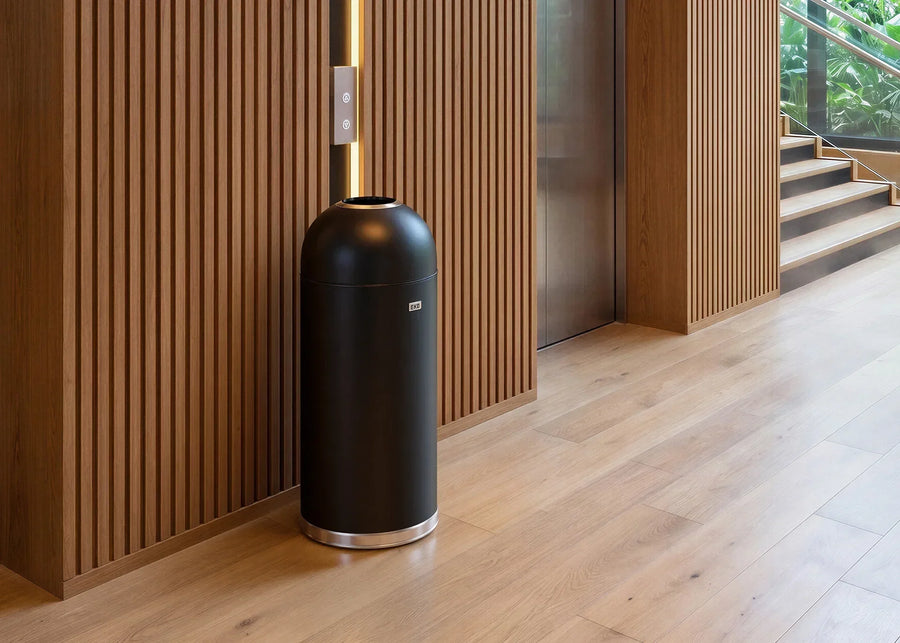
Reception areas are often the first part of an office seen by visitors. Waste containers in these areas should look professional and fit naturally with the surrounding interior.
Restrooms: Choose Slim Solutions for Limited Space
Office restrooms often have limited rooms around sinks, entrances, and walkways. The right bin should fit the layout without blocking walkways. Slim step bins and sensor bins can work well in restrooms where space is limited.
Establish a Consistent Office Waste Setup
Offices do not need the same trash can in every location. Different areas require different solutions based on how employees use the space. Standardizing a small group of approved products can make ordering, cleaning, and liner replacement easier.
Common Office Waste Setup Mistakes
Using the Same Bin Everywhere
Different areas collect different types and amounts of waste. A workstation bin may not be suitable for a break room, reception area, or restroom.
Adding Recycling Bins Without Clear Labels
Employees may not know where to place items if recycling categories are unclear.
Removing Desk Bins Without Testing Employee Needs
Centralized stations can work well in some offices, but they should still be easy for employees to reach.
Choosing Too Many Different Bin Styles
Using too many product types can make ordering, cleaning, and replacement more complicated.
Office Waste Solutions at a Glance
|
Office Area / Application
|
Recommended EKO Solution
|
Capacity
|
Key Benefits
|
|
Workstations & Meeting Rooms
|
10 L / 2.6 Gal
|
Quick disposal
Compact placement Stainless steel appearance |
|
|
Shared Areas & Recycling Stations
|
30 L + 30 L
|
Clear waste separation
Independent compartments Easy sorting |
|
|
Break Rooms & Reception Areas
|
80 L / 50 L
|
Large capacity
Quiet operation Easy daily use Professional appearance |
|
|
Restrooms
|
10 L / 2.6 Gal
|
Slim design
Touchless operation Soft-close butterfly lid |
Plan a Better Office Waste System
A successful office waste system does not require the same trash can in every area. The best setup matches each location with a solution that fits how employees work and how facility teams maintain the space.
Sources
EKO Commercial Product Specifications and Feature Library
Industry-Specific CTA
Compare EKO commercial waste solutions for offices, including workstation bins, recycling stations, break room trash cans, reception solutions, and restroom waste containers.
Frequently Asked Questions
What trash cans work best at office workstations?
Small open-top bins around 10 L, such as the Laguna, let employees dispose of paper and everyday waste quickly without opening a lid, while staying compact beside desks and in meeting rooms.
How should offices set up recycling stations?
Place dual-compartment recycling bins in shared areas like kitchens and printer zones so different disposal options sit together in one clearly labeled station.
What are common office waste setup mistakes?
Using the same bin everywhere, adding recycling bins without clear labels, removing desk bins without testing employee needs, and mixing too many bin styles, which complicates ordering and cleaning.