

On this page
Material choice on a commercial trash can affects three things buyers care about: how it looks after a year of daily use, how it holds up to commercial-grade cleaning chemicals, and what it costs over its full service life rather than at the invoice. Stainless steel and plastic are the two materials across our catalog, and the right choice depends on which of those three factors matters most for a given space.
Two Materials, Different Economics
Stainless steel dominates our mid-to-large capacity lines — Madison, Hudson, Urban, Mirage, and most sensor and recycling families are built in stainless. Plastic shows up primarily in smaller-format and value-tier products: the Hana step can series, Fandy tabletop bins, and a handful of compact sensor cans like the Morandi and Brio. That split isn't accidental — stainless steel's durability advantage matters most on larger, higher-traffic units, while plastic's cost advantage is most attractive on small, high-volume-purchase items like tabletop bins where a scratch or dent is less consequential.
Stainless Steel: Durability and Perceived Quality
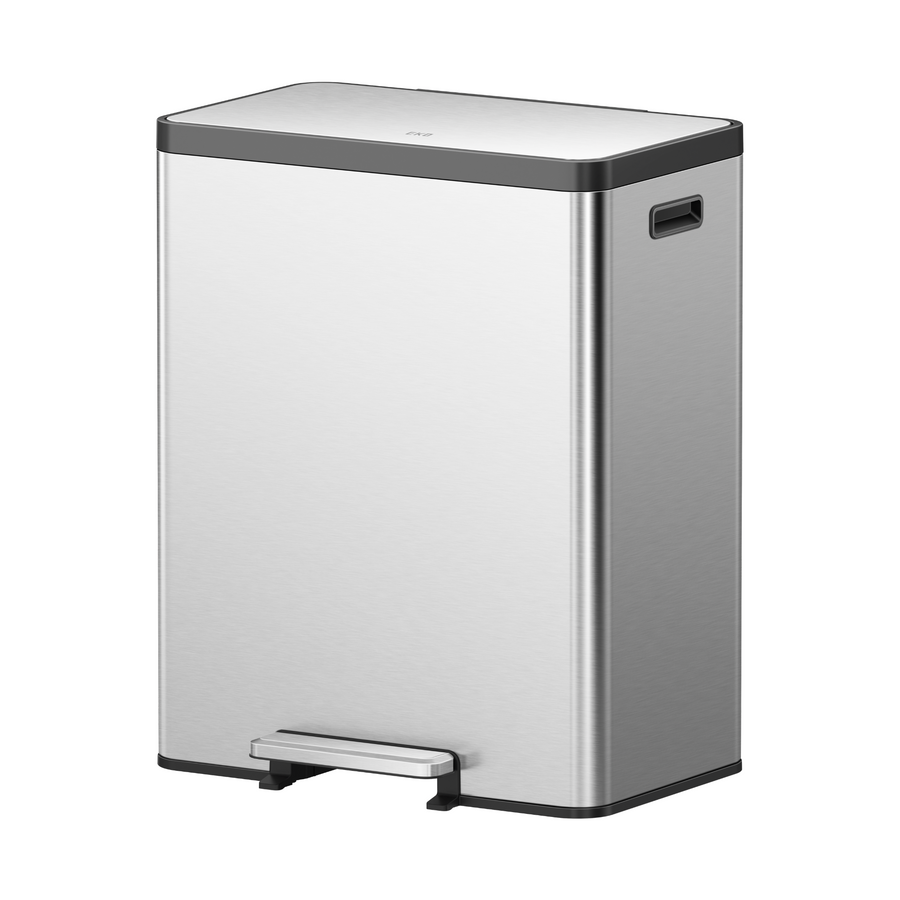
Stainless steel resists dents, doesn't discolor under UV exposure, and tolerates the disinfectants and degreasers used in commercial cleaning without degrading the way some plastics do over repeated exposure. It's also the material buyers reach for when appearance matters to guests or clients — a brushed or matte finish reads as higher quality in a hotel lobby or corporate reception than a plastic equivalent, even at the same capacity.
Finish matters as much as the base material for maintenance. Matte black and matte stainless finishes (used across the Madison, Hudson, and Mirage-T lines) resist visible fingerprints and smudges significantly better than polished or mirror-chrome finishes, which show every touch point within hours in a high-traffic area. For any stainless can placed somewhere with frequent hand contact — lobbies, break rooms, restroom entries — a matte finish is worth the modest premium over polished chrome.
Plastic: Lower Upfront Cost, Different Maintenance Profile
Plastic resin cans, such as the Hana Select and Hana Slim step can series, cost less per unit and are lighter to move and reposition, which matters for high-volume purchases across many identical small spaces. Plastic doesn't dent the way steel can under impact, but it can crack under sustained stress or extreme temperature swings, and colored plastic finishes can fade under prolonged UV exposure in ways stainless doesn't. Plastic is also more prone to retaining odor over time than stainless, since the surface is more porous at a microscopic level even when visibly smooth.
Cleaning and Disinfection Differences
Stainless steel tolerates a broader range of commercial disinfectants, including chlorine-based and alcohol-based products, without surface damage, which matters in food-service and healthcare-adjacent facilities running strict cleaning protocols. Plastic surfaces need more attention to chemical compatibility — some harsh disinfectants can cause visible clouding or micro-cracking in plastic resin over repeated use, so facilities standardizing on plastic cans in food-service areas should confirm their cleaning chemical list against manufacturer compatibility before committing to a large order.
Cleaning frequency also plays a role in which material ages better. A can wiped down multiple times per shift under a strict food-service protocol will show wear on plastic well before it shows wear on stainless, since repeated chemical exposure and abrasive wiping compound faster on a resin surface than on brushed or matte steel. For any receptacle on a high-frequency cleaning schedule, that compounding effect alone often justifies the stainless premium regardless of traffic or appearance considerations.
| Factor | Stainless steel | Plastic |
|---|---|---|
| Upfront cost | Higher | Lower |
| Dent/impact resistance | High | Moderate (cracks under stress instead) |
| Fingerprint/smudge resistance | High with matte finish | Not applicable (non-reflective) |
| Chemical/disinfectant tolerance | High | Moderate — check compatibility |
| UV/fade resistance | High | Lower for colored finishes |
| Weight/portability | Heavier | Lighter |
Total Cost of Ownership Over a Multi-Year Horizon
Plastic wins on day-one cost, but stainless steel typically wins on a three-to-five-year total cost of ownership in high-traffic or appearance-sensitive areas, since it avoids the replacement cycle that dented or faded plastic cans often trigger early. Run the comparison the same way you'd model any capital equipment decision: divide total purchase cost by expected years of service before replacement, not by unit price alone. A stainless can at roughly double the unit cost of a plastic equivalent but with double the realistic service life before a visible-quality replacement is needed is a wash on cost and a win on downtime, since fewer replacement cycles mean fewer disruptions to the space during a swap.
Mixing Materials Within One Property
Few properties run a single material across every space, and that's the right call rather than a compromise. A hotel might run stainless in the lobby and guest corridors where appearance and durability both matter, and plastic in back-of-house storage and loading areas where neither is a priority. An office might run stainless in the reception area and client-facing conference rooms, and plastic at individual desk clusters where units are numerous and the visual bar is lower. The decision framework is the same one used for type and capacity elsewhere in this series: match the spec to what the specific space actually demands, rather than defaulting to one material for the whole building out of purchasing convenience.
Which Areas Should Default to Stainless
A short list of areas where the stainless premium is close to non-negotiable: any space guests or clients see directly (lobbies, reception, conference rooms), any food-service line subject to health-code cleaning protocols, and any outdoor installation exposed to weather and UV over multiple years. Everywhere else — internal storage, low-visibility back-of-house corridors, high-volume small-format purchases like tabletop bins — plastic is a defensible and often preferable choice on cost alone. Compare material options directly across our full product range, and if you're pricing a mixed-material rollout across a large property, our team can help through the quote request form.