

On this page
Why Bag Sizing Is a Procurement Decision, Not an Afterthought
Trash bags look like a commodity line item until the wrong size shows up on a loading dock. A bag that is too small tears at the seams under normal fill weight, leaks on carpet and tile, and forces staff to double-bag every liner change. A bag that is too large bunches at the rim, slips into the can, and wastes plastic on every single pickup. Multiply either problem across dozens of receptacles and multiple properties, and bag sizing stops being trivial — it becomes a recurring labor cost and a liability. For facilities and procurement teams standardizing across a portfolio, getting the bag-to-can match right the first time is the fastest way to cut waste-handling labor and avoid emergency reorders.
How the Bag Code System Works
EKO's commercial liners are sold by letter code (Code A through Code Z), and each code corresponds to a fixed bag capacity expressed in gallons and liters, not to a specific can model. That matters: the same Code F bag fits any 50-liter step can on the floor, regardless of manufacturer or finish, as long as the can's rim dimensions are in range. Once a facilities team learns the code system, reordering becomes a one-line lookup instead of a guessing game every time a new can model is added to the fleet.
The table below lists the core codes carried for commercial and institutional accounts, with their rated capacity and the roll counts they ship in.
| Bag Code | Rated Capacity | Best-Fit Can Range | Roll Counts |
|---|---|---|---|
| Code A | 1.6 Gal / 3–6L | Under 8 Gal / <30L (tabletop and small bathroom cans) | 80 ct |
| Code B | 2.6 Gal / 7–10L | Under 8 Gal / <30L (10L sensor and step cans) | 80 ct |
| Code C | 4 Gal / 10–15L | Under 8 Gal / <30L (12L step cans) | 80 ct |
| Code E | 9.5 Gal / 30.3–36L | Under-30L to low 8–16 Gal cans | 80 ct |
| Code F-1 | 8 Gal / 30.3L (slim/extra-long) | Narrow 30L compartments and kitchen liners | 60 – 100 ct |
| Code K | 9.3 Gal | 8–16 Gal / 30–60L compartments | 60 – 110 ct |
| Code M | 10.6 Gal | 8–16 Gal / 30–60L (40L+ dual-compartment sides) | 60 – 110 ct |
| Code J | 12.9 Gal / 45–49L | 8–16 Gal / 30–60L (45–49L step cans) | 60 – 110 ct |
| Code F | 13 Gal / 50L | 8–16 Gal / 30–60L (the most common 50L step can size) | 60 – 110 ct |
| Code Z | 12.5 Gal / 40–60L | 8–16 Gal / 30–60L (wide fit range) | 110 ct |
| Code G | 21 Gal / 80L | 16 Gal+ / 60L+ (80L open-top and sensor cans) | 60 – 110 ct, scented options |
Note that bag capacity and can capacity are not the same number. A liner is always rated to hold somewhat more volume than the can it dresses, because it needs three to six inches of overhang at the rim to fold over the lip and tie off cleanly. Treat the ranges above as a starting point, then confirm against the actual rim circumference and height of the can you are outfitting — this is exactly the kind of detail that matters when standardizing across a mixed fleet in the full range of commercial cans.
Fit Rules: Matching a Code to Your Can
Three measurements decide which code fits: the can's stated liter or gallon capacity, its rim shape (round, semi-round, or slim/rectangular), and its height. A code rated for the right volume can still fit poorly on a tall, narrow can if the bag was cut for a round profile. As a practical rule:
- Under 8 Gal / <30L cans (small bathroom and tabletop cans) pair with Codes A, B, or C depending on the exact liter rating on the can.
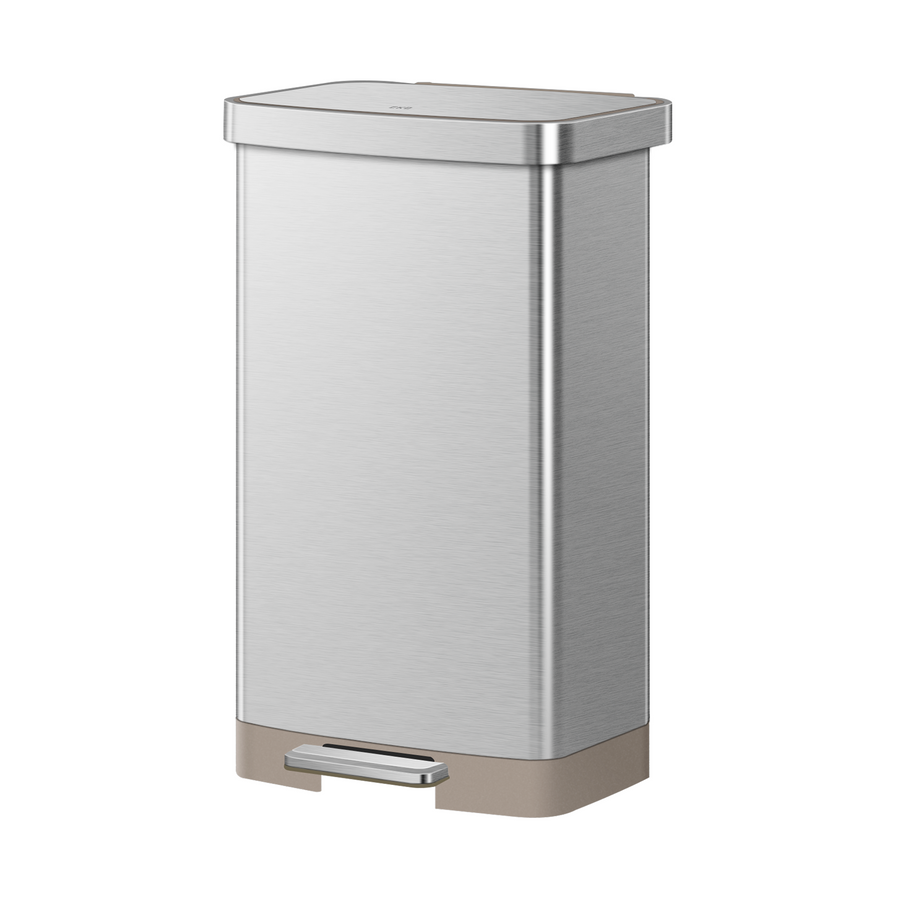
- 8–16 Gal / 30–60L cans — by far the largest category in a typical commercial fleet, covering most 50L step cans and sensor cans — pair with Codes E, F-1, K, M, J, F, or Z. Code F is the default for standard 50L step cans; Code Z's wider range is useful when a site runs mixed 40–60L cans and wants to standardize on one bag.
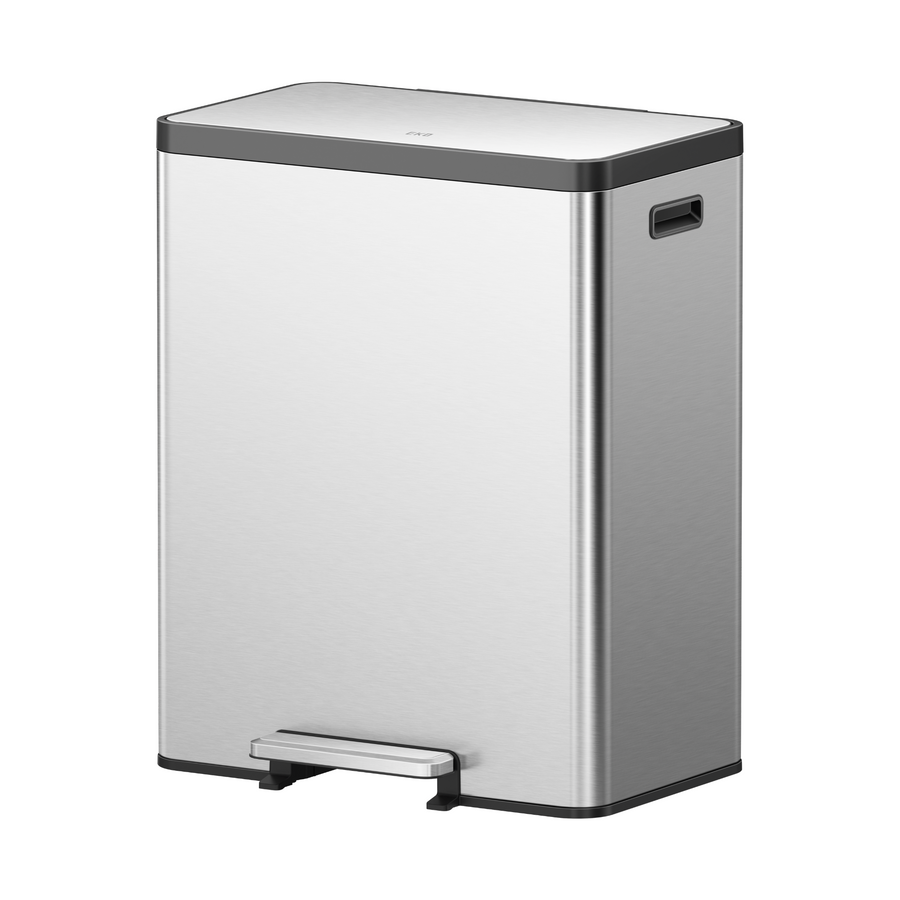
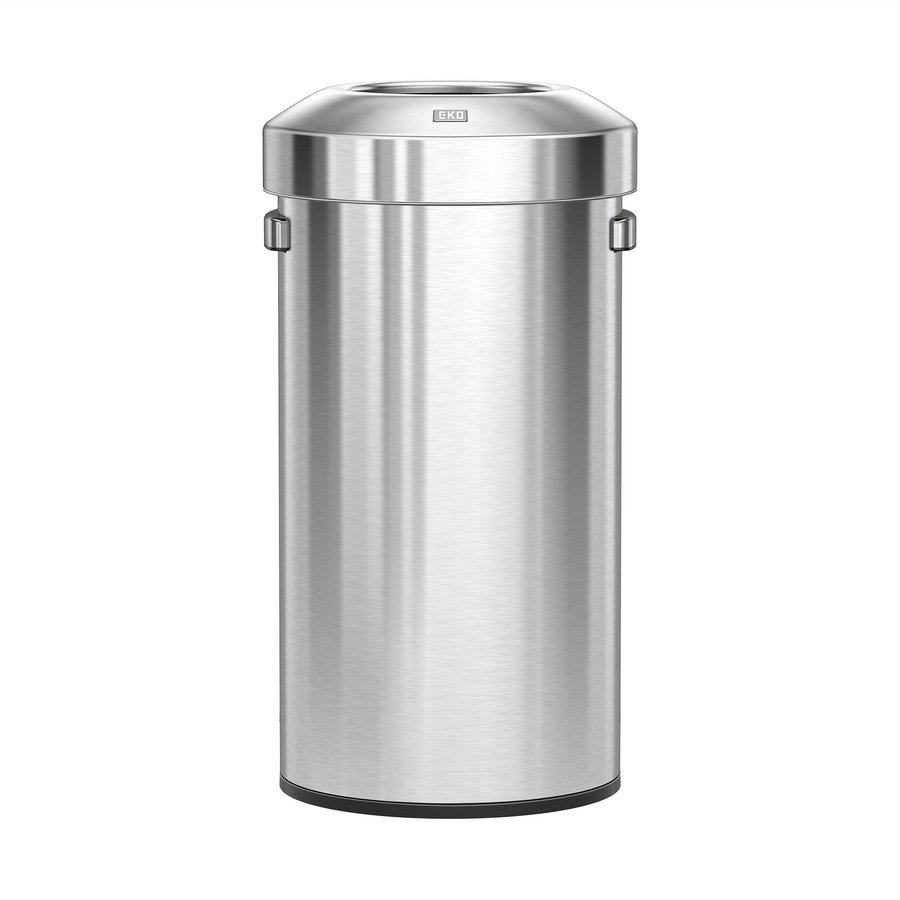
- 16 Gal+ / 60L+ cans (large open-top and sensor cans used in high-traffic public areas and back-of-house kitchens) pair with Code G or a comparable 21-gallon liner.
- Dual-compartment recycling cans need two liner sizes per unit, one for each side — check both compartment volumes independently rather than ordering one code for the whole unit.
What Over-Sizing and Under-Sizing Actually Cost
Bags that are too small
An undersized liner stretches thin at the base, splits under normal fill weight, and forces janitorial staff to double-bag as a workaround — which quietly doubles bag consumption without anyone noticing on the invoice. It also increases the odds of a leak on carpet or hard flooring, which turns a five-minute liner change into a cleanup incident.
Bags that are too large
An oversized liner bunches inside the can, reducing usable capacity and triggering more frequent pickups than the can's rated volume should require. Excess bag material at the rim also looks unfinished in front-of-house settings, which matters more than it sounds for hospitality and lobby installations where the can itself is part of the guest experience.
Both failure modes push labor and material cost in the same direction: more liner changes per shift than the can's actual capacity should demand. Sizing correctly the first time is a one-time decision that pays out on every pickup after it.
Liters to Gallons, Without the Guesswork
Most EKO product listings show both units, but the conversion is worth knowing cold for quick math in the field: 1 US gallon equals roughly 3.785 liters, so a 50-liter can is about 13.2 gallons, and an 80-liter can is about 21.1 gallons. When a spec sheet only lists one unit, multiply liters by 0.264 to get gallons, or multiply gallons by 3.785 to get liters. This is the same math behind every capacity figure in the table above, and it is useful for cross-checking a can's rated volume against a bag code before placing a bulk order.
Buying by the Case: Roll Counts and Per-Bag Economics
Commercial liners ship in rolls of 60, 80, 100, or 110, with count generally scaling down as bag size scales up — a Code A roll (small bags) ships at 80 count, while a Code G roll (large 80L bags) is available at 60 or 110 depending on the case pack. For multi-site buyers, the per-bag cost calculation should always net out to cost-per-pickup, not cost-per-roll: a slightly more expensive Code Z bag that reliably fits a wider range of can sizes can still be cheaper overall than stocking three separate codes with smaller minimum order quantities each. Standardizing on fewer codes across a portfolio also reduces the SKU count facilities teams need to track in inventory and simplifies reordering through the trash bag collection.
Scented variants (fresh floral, lemon, lavender) are available on select codes such as Code G, which is worth flagging for restroom and back-of-house programs where odor control is part of the spec, not just capacity.
A Sizing Checklist for Multi-Site Programs
- Pull the rated liter/gallon capacity for every can model currently deployed across the portfolio.
- Group cans into the three capacity bands (Under 8 Gal, 8–16 Gal, 16 Gal+) and assign one bag code per band wherever the range allows.
- Flag dual-compartment recycling units separately — they need two codes, one per side, and the two sides are frequently different volumes.
- Confirm rim shape (round vs. slim) before finalizing a code for any new can model added to the fleet.
- For large or multi-property orders, request a quote through the contact page to lock in case pricing and confirm lead times before a rollout.